
a little of everything, covered
Insurance for Florida handymen
Handyman work is a little of everything. I’m Chris, and I can help you sort out your options.

FL License #G193830
Call, text or email
The basics

If you damage a customer’s home
General liability is the coverage for injury or damage you cause to other people. A bad fitting that floods a kitchen is one example.
If you bring on a helper
Workers’ comp is for employees who get hurt on the job. Even a part-time helper can change the answer.
Your tools and trailer
Your saws, ladders and drills are how you earn a living. Ask me if they can be covered when stolen from your truck.
Proof for the job
Bigger customers often ask for a certificate of insurance first. I can help you request one.
What can go wrong on a handyman job
Small jobs add up. Here’s what I’d ask about.
- You patch a wall and a hidden pipe gets punctured. Water damage to the home points to general liability.
- A guest trips over your toolbox in a hallway. That’s a general liability question.
- Your helper slips off a ladder while you’re hanging a fence gate. Ask me about workers’ compensation.
- Your van is broken into and your power tools are taken. Ask about tools and equipment coverage.
- A customer says the job you did last month caused a problem. General liability is the one to ask about.
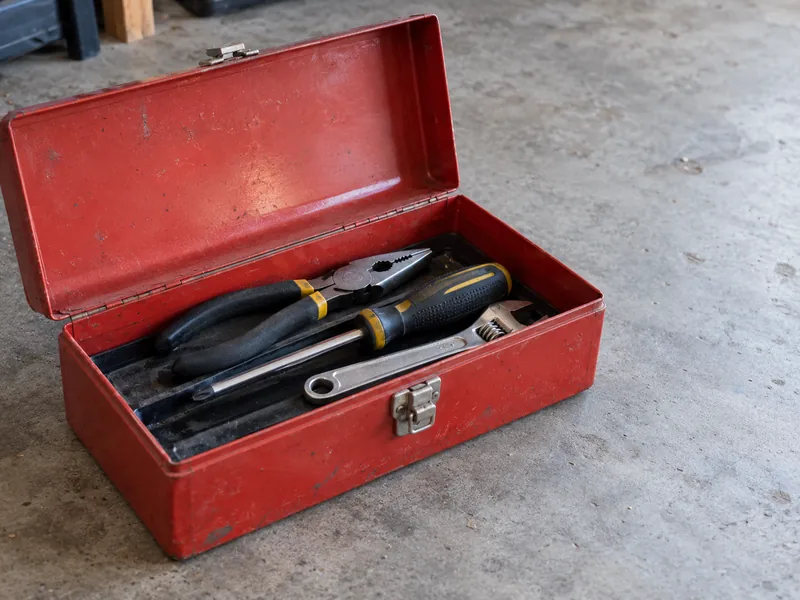
Coverage to ask me about
Depending on the work you do, the state may treat it as construction. In Florida, construction businesses generally need workers’ comp once they have one or more employees, and other businesses generally need it at four or more employees. The Florida Division of Workers’ Compensation has the official rules.
- General liability. This responds to injury or damage you cause to others while you work.
- Workers’ compensation. This is for employees who are hurt on the job, and the rules depend on your work and headcount.
- Tools and equipment. Ask whether your tools, ladders and trailer can be covered.
- Commercial auto. If you drive a truck or van to jobs, ask me about it.
What I’ll ask you
A few honest answers help me.
- What work you do, and what you won’t touch
- Your yearly revenue
- Payroll and how many employees you have
- Whether you hire subcontractors
- Any prior claims
- What a customer or contract is asking you to carry
- Your deadline to get covered

Questions I get
Can a customer ask me for a certificate of insurance?
Yes, it happens a lot. Whether you can get one depends on the company and the policy, so tell me what the job requires.
Do I need workers’ comp if I work alone?
It depends on the work you do, your business setup and whether you have employees. The state’s workers’ comp division has the official rules.
Are my tools covered by general liability?
Usually not. General liability is about harm you cause to others. Tools and equipment are often a separate coverage, and what it includes depends on the company.
What if I use subcontractors on bigger jobs?
It depends on the company and the policy. Some companies ask for proof your subs carry their own coverage.

Official sources
Coverage, eligibility and price depend on the company and your business. This page is general information, not a quote.

Have a question? Just ask.
Call me or send a quote request. You’ll hear back from a real person.