

Chris Chase
Licensed Florida insurance broker · FL License #G193830 · NPN 21407586
Last reviewed October 2026
The short version
- A four-point inspection looks at the roof, electrical, plumbing, and heating and air. The homeowner pays for it.
- Companies commonly require one once a home is somewhere between 20 and 40 years old.
- A problem on the report usually means a repair or a different company, not the end of the road.
If your home has some years on it, an insurance company may ask for a four-point inspection before offering a policy. I’ll explain what it involves and how to read the result.
In this article
What it is
The Florida Department of Financial Services describes the four-point inspection as one required for older homes, covering the roof (to determine its life expectancy), the plumbing, the electrical wiring, and the heating and air. A licensed inspector looks at the age and condition of each system and writes a report with photos.
The Department also notes two practical points. The homeowner pays for it. And if a required inspection isn’t provided, the company can decline to offer coverage.
When you’ll need one
Each insurance company sets its own age trigger, and they’re far apart. Some ask at 20 years, some at 30, some at 40, and a few don’t require one at all. Some companies do their own inspection instead and will accept a recent pre-purchase home inspection in its place.
I’ll tell you up front whether the companies I’m quoting will want one, so you don’t pay for an inspection you don’t need.
Point one: the roof
- Age, material, and condition
- Estimated remaining useful life
- Signs of leaks or damage
- Whether there’s more than one layer
Under Florida law, a roof 15 years or older can’t be refused for age alone if an inspection shows five or more years of useful life left. See Florida Home Insurance and Roof Age.
Point two: electrical
- The panel brand. A handful of older breaker panel brands are declined by most insurance companies.
- The wiring type. Single-strand aluminum wiring is declined by some companies and accepted by others when it’s been repaired with approved connectors.
- The service size. Some companies want at least 100 to 150 amps, and occasionally more on older homes.
- Visible hazards.
More in Electrical Panels, Wiring, and Home Insurance.
Point three: plumbing
- What the pipes are made of. Polybutylene limits your options a lot. Galvanized and cast iron raise similar questions.
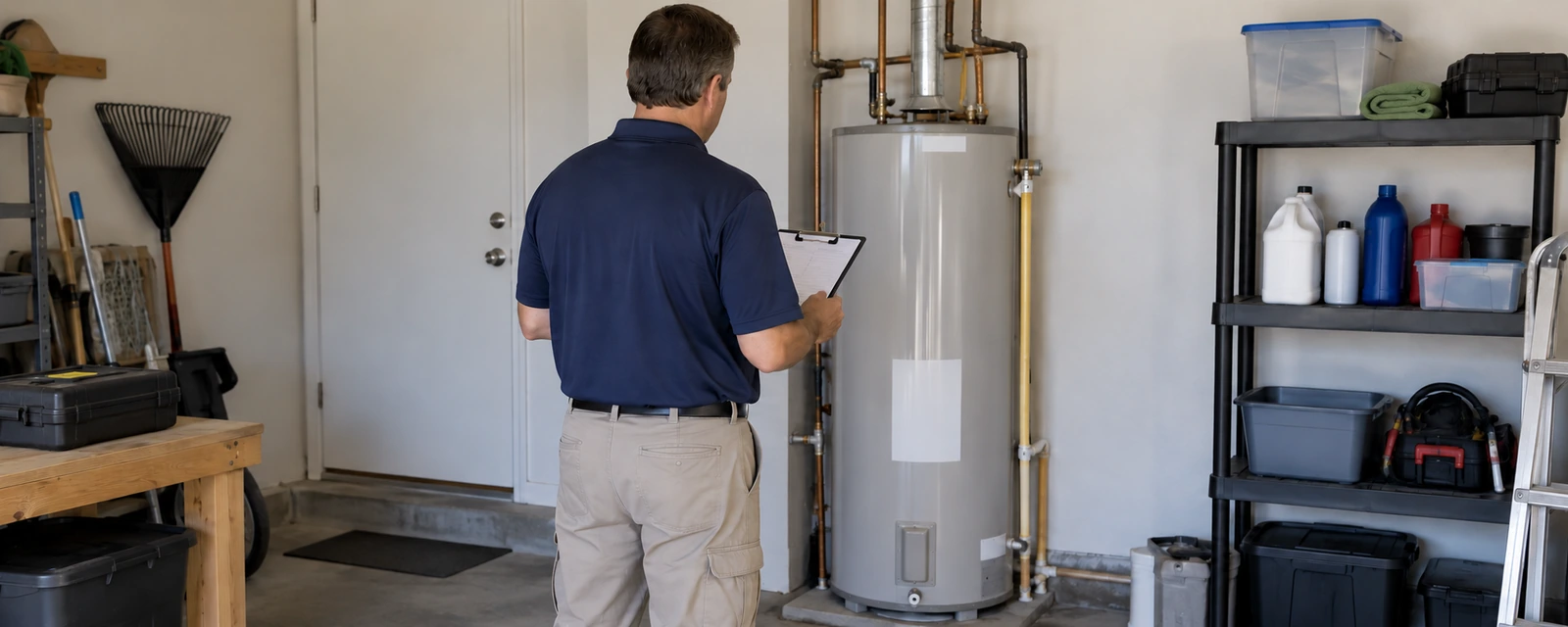
- The water heater’s age. Many companies get cautious around 15 years, sometimes a little later if the tank is in the garage.
- Signs of leaks, active or past.
More in Water Damage, Plumbing, and Older Homes.
Point four: heating and air
- The age and condition of the system
- Whether it’s working
- With some companies, a paid annual maintenance contract earns a small credit
The other inspections you may hear about
The Department of Financial Services describes four kinds, and it helps to know which is which:
| Inspection | What it does | Who pays |
|---|---|---|
| Underwriting inspection | A visual check of the property by the insurance company, usually exterior, looking at construction and hazards such as pools, trampolines, unrepaired damage, and dead tree limbs | The insurance company |
| Four-point inspection | Roof, electrical, plumbing, and heating and air on an older home | The homeowner |
| Wind mitigation inspection | Documents features that earn wind credits | Usually the homeowner |
| Specialized inspection | A single item, commonly roof life expectancy | The homeowner |
A four-point is about condition. A wind mitigation inspection is about credits. Many inspectors do both in one visit, which is usually cheaper than two trips. See Wind Mitigation and Homeowners Insurance.
If the inspection finds a problem
A finding isn’t automatically a decline. What happens depends on the item and the company:
- Some items have to be repaired before a company will offer coverage.
- Some lead to a policy with a limit, such as reduced water damage coverage.
- Some simply mean a different company is the better fit.
Send me the report before you panic. I’ll go through it with you, explain how an insurer is likely to read each item, and check which companies will accept the home as it is.
After a repair
- Keep the permit and the paid invoice.
- Ask the inspector to update the report or issue a new one showing the repair.
- Send me the updated report so I can re-shop if it opens up more companies.
Timing
Insurance companies want a recent report. Some require the inspection to be done within a short window before the policy starts, in some cases as little as 10 days when the prior coverage was placed by a lender. If you’re buying a home, order the four-point and wind mitigation along with your home inspection during the inspection period, so a problem shows up while you can still negotiate. See Buying a Home in Florida: Your Insurance Timeline.
What age does to the price
Averages from homeowners insurance quotes in the area over the past 36 months, as the yearly price for every $1,000 of dwelling coverage:
| Year the home was built | Average price per $1,000 of coverage |
|---|---|
| Before 1980 | $19.50 |
| 1980 to 2001 | $15.80 |
| 2002 to 2014 | $10.40 |
| 2015 or newer | $6.30 |
These are averages of past quotes, not an offer. They show why the systems in an older home get so much attention.
What I do and don’t do
I don’t perform inspections. I review the completed report with you and explain what it means for your insurance.
Common questions
Do I need a four-point inspection?
It depends on the home’s age and the company. Common triggers are 20, 30, or 40 years. I’ll tell you before you order one.
Who pays for it?
The homeowner, according to the Florida Department of Financial Services.
Can I use my home inspection instead?
Some companies accept a recent pre-purchase home inspection in place of their own. Most that require a four-point want it on a four-point form.
What fails a four-point?
There’s no pass or fail on the form. Companies react to specific items: certain panel brands, certain wiring and pipe types, an old water heater, or a roof with little life left.
Every insurance company has its own rules and prices, and they change. I’ll tell you what applies to the options I find for you.
Official sources
- Florida Department of Financial Services: homeowners insurance overview
- Florida Statute 627.7011: homeowners policies, roofs, and replacement cost
Keep reading
- Electrical Panels, Wiring, and Home Insurance
- Water Damage, Plumbing, and Older Homes
- Wind Mitigation and Homeowners Insurance
- Florida homeowners insurance
Related coverage: homeowners insurance and flood insurance.
Want me to look at your options?
Call me or request a quote online. A real person will get back to you, not a bot.