
(813) 323-9481

Category: Home Insurance

  • Insuring a Rental Property in Florida: What Landlords Should Know

    Insuring a Rental Property in Florida: What Landlords Should Know

    Chris Chase, licensed Florida insurance broker

    Chris Chase
    Licensed Florida insurance broker · FL License #G193830 · NPN 21407586
    Last reviewed October 2026

    The short version

    • A home you rent out is insured on a dwelling policy, usually called a DP-3, not a regular homeowners policy.
    • Liability, contents and theft coverage are often optional on a landlord policy, so check for them.
    • Older rentals often get limited water coverage and a roof paid at depreciated value.
    • Landlord policies in the area have averaged about $3,620 a year over the past 36 months. Every Florida home policy also carries a separate hurricane deductible, usually 2% to 10% of the dwelling limit, which you pay first on a hurricane claim.

    If you own a house that someone else lives in, you need a different kind of policy than the one on your own home. It’s one of the most common gaps I find: a home that became a rental years ago and is still on the original homeowners policy.

    Landlord policies also work differently in ways that aren’t obvious from the first page. Read this before you buy one, renew one or turn your home into a rental.

    In this article

    Why a rental needs its own type of policy

    A homeowners policy, the HO-3, is built for a home the owner lives in. It bundles the house, your belongings, your living expenses if you have to move out, and your personal liability.

    When a tenant lives there instead, the risk is different. You aren’t there to notice a slow leak. Your furniture isn’t in the house. And your exposure is as a property owner, not a resident. The policy built for that’s a dwelling fire policy. The broadest common version is the DP-3.

    If you move out and rent your home without changing the policy, you risk a claim being questioned because the home isn’t being used the way the policy says. Tell your agent before the tenant moves in.

    What a DP-3 covers

    • The dwelling. The house itself, at an amount based on the cost to rebuild.
    • Other structures. Sheds, fences, detached garages.
    • Fair rental value. Lost rent while the home can’t be lived in after a covered loss.
    • Optional coverages. Liability, medical payments, your contents and theft are frequently add-ons instead of built in.

    That last point is the one that catches people.
    A front door stands slightly open with daylight inside.

    What’s often not automatic

    Who can own the property

    This is one place landlord policies are more flexible than homeowners policies. Rentals are commonly owned by an LLC, a corporation, a trust or a partnership, and dwelling policies are generally set up to handle that. The details differ by company:

    • Some will include liability for an LLC or trust.
    • Some will insure the building for an entity but exclude personal liability and offer premises liability instead.
    • Some want an individual listed along with the entity.
    • Some limit how many rental properties one owner can insure with them.

    The name on the policy should match the name on the deed. If you move a rental into an LLC, tell me so the policy can be updated.

    Water damage rules start earlier on rentals

    On a homeowners policy, water damage limits tend to show up when a home reaches around 40 years old. On landlord policies, I commonly see them start at 30 years. Depending on the company, an older rental may get:

    • Water damage coverage limited to a set amount, such as $10,000.
    • Water damage excluded, with the option to buy back a limited amount.
    • Full water coverage only after an inspection shows the plumbing has been updated.

    Water is the most common serious loss in a rental, because a leak can run for days before anyone tells the owner. If you own an older rental, find out exactly what your water damage limit is. Don’t assume.

    Roofs and older homes may be paid at depreciated value

    Two things work differently on many landlord policies.

    First, the roof. It’s common for a landlord policy to pay roof claims on a schedule or at actual cash value, based on the age and material of the roof. A 15-year-old shingle roof would be paid at a fraction of the cost of a new one.

    Second, the whole house. Some companies settle claims on older rental homes, often those 30 years and older, at actual cash value across the board. That means depreciation is taken off the entire claim, not just the roof.

    Ask this question directly on every quote: “Is the dwelling paid at replacement cost or actual cash value, and what about the roof?” Two policies with the same Coverage A amount can pay very different amounts after a loss.

    Short-term and vacation rentals

    Renting by the night or the week is a different risk from a 12-month lease, and companies are far apart on it. Among the rules I see:

    • Some won’t insure nightly rentals at all.
    • Some accept short-term rentals with a minimum stay, a surcharge or a special endorsement.
    • Some require a rental management company for stays under a month.
    • Some limit how many short rentals you can have in a year.
    • Renting by the room and home-sharing are often not accepted.

    If you list a property on a vacation rental site, say so on the application. A policy written for a long-term tenant may not respond to a claim that happens during a weekend booking.

    Common questions

    Can I keep my homeowners policy if I rent my house out?

    No. A homeowners policy is written for a home the owner lives in. A rental should be on a landlord policy. Let your agent know before the tenant moves in.

    Does my landlord policy cover my tenant’s belongings?

    No. Tenants need their own renters insurance for their things and their own liability.

    Can my LLC be the named insured?

    In many cases, yes. Companies handle liability for entity-owned rentals differently, so I check that before I quote.

    Coverage, eligibility and pricing vary by company and by property. Averages aren’t a quote.

    Official sources

    Keep reading

    Related coverage: landlord insurance, condo insurance and homeowners insurance.

    Ready to see what’s out there?

    Send me a quote request or give me a call. I’ll shop it and explain what I find.
  • How Past Claims Affect Your Home Insurance

    How Past Claims Affect Your Home Insurance

    Chris Chase, licensed Florida insurance broker

    Chris Chase
    Licensed Florida insurance broker · FL License #G193830 · NPN 21407586
    Last reviewed October 2026

    The short version

    • Insurance companies look at claims you have filed and claims filed on the home before you owned it.
    • Water and liability claims usually weigh more than a single weather claim.
    • Florida law limits a company’s ability to drop you over one water claim.
    • You generally have one year from the date of loss to report a property claim in Florida.

    Insurance is there to be used. But every claim also becomes part of a record, and that record is one of the first things a company looks at when you apply for a new policy or come up for renewal.

    I get two questions about this all the time. “Will filing this claim hurt me?” and “Why am I being asked about a claim I never filed?” This article answers both, and it sticks to what Florida law says and what I see when I quote homes.

    In this article

    Two histories: yours and the home’s

    When you apply for home insurance, a company is interested in two separate things.

    • Your history. Claims you have filed as a homeowner or renter, at this address or a previous one.
    • The property’s history. Claims filed on the house itself, including by people who owned it before you.

    That second one is the surprise. A home that had water damage under a prior owner can raise questions for the next buyer, because the company wants to know the damage was properly repaired and the cause was fixed.

    Insurance companies share claim information through industry claim databases. When you apply, the company can pull a report showing claims tied to you and to the address. That’s why the application questions about prior losses need to be answered accurately. The company is going to see the record either way.

    Which claims weigh the most

    Not all claims are viewed the same way. Each company sets its own rules, but the pattern I see is consistent.

    Water claims

    Water damage that isn’t from weather, such as a burst supply line, a leaking water heater or a failed drain, gets the most attention. Companies see it as something that can happen again in the same house, especially if the plumbing is older. More than one water claim in a few years makes a home noticeably harder to place.

    Liability claims

    A claim where someone was injured, such as a dog bite or a fall, is taken seriously. Companies will often ask what has changed since then.

    Theft and fire

    These are looked at case by case. A company will usually want to know the cause and whether it has been addressed.

    How far back do companies look?

    It depends on the company. Applications commonly ask about losses in the past three to five years. The number of claims in that window matters, and so does the type. One claim rarely closes every door. Two or three in a short period will narrow your choices and can raise your price.

    What Florida law protects

    Florida has some specific rules that work in your favor.

    Deadlines for reporting a claim

    Florida shortened these deadlines in recent years, and many homeowners haven’t heard. Under section 627.70132 of the Florida Statutes:

    • A new claim or a reopened claim must be reported to the insurance company within 1 year after the date of loss.
    • A supplemental claim, meaning a request for more money on a claim already filed, must be reported within 18 months after the date of loss.

    For hurricanes, the date of loss is tied to when the storm made landfall. The point is simple: if you have damage, don’t sit on it. Waiting can cost you the claim entirely.

    Should you file a small claim?

    This is your decision, and I’ll never tell you not to use coverage you’re paying for. This is how I’d think it through.

    • Get a repair estimate first, if the situation allows. You need a real number.
    • Compare the estimate with your deductible. If the repair is $2,500 and your deductible is $2,500, a claim pays nothing and may still go on your record.
    • Think about what kind of loss it is. A sudden, serious loss is exactly what the policy is for. A small repair close to your deductible is a closer call.
    • Don’t delay emergency steps. Stop the water, protect the property and take photos, whether or not you end up filing.
    • Remember the deadline. Deciding to wait is fine. Forgetting for a year isn’t.

    Calling your agent to ask a general coverage question is different from reporting a loss to the insurance company. If you aren’t sure whether to file, call me first and I’ll talk it through.

    If you have claims and need a new policy

    A claim history doesn’t make you uninsurable. It means the paperwork matters more. What helps:

    • Proof of repairs. Invoices, permits and photos showing the damage was fixed.
    • Proof the cause was addressed. A new water heater, replaced supply lines, a new roof.
    • A current four-point inspection on an older home, showing the systems are in good condition.
    • Accurate answers. A claim you forgot to mention looks worse than one you explained.
    • An independent agent. Companies don’t all weigh claims the same way, so checking several is the whole point.

    Common questions

    Will one claim make my insurance go up?

    It can, depending on the company and the type of claim. Weather claims are generally viewed differently from water or liability claims. I can’t predict a specific increase.

    Can my company drop me for filing a water claim?

    Florida law says a single water damage claim can’t be the sole reason for cancellation or nonrenewal, unless you didn’t take steps the insurer reasonably asked for to prevent another one.

    Why does the application ask about claims before I owned the house?

    Because companies look at the property’s history as well as yours. They want to know prior damage was repaired.

    How claims are weighed varies by company. This article is general information, not legal advice. For questions about a specific claim, read your policy or contact the Florida Department of Financial Services.

    Official sources

    Keep reading

    Related coverage: homeowners insurance and flood insurance.

    Not sure where you stand? Ask me.

    Request a quote or call me to review your options. You’ll talk to a real person.

  • Seasonal Homes, Rentals, LLCs, and Trusts

    Seasonal Homes, Rentals, LLCs, and Trusts

    Chris Chase, licensed Florida insurance broker

    Chris Chase
    Licensed Florida insurance broker · FL License #G193830 · NPN 21407586
    Last reviewed October 2026

    The short version

    • How a home is used and who owns it decides which type of policy it needs.
    • A seasonal home can usually be insured, but the company needs to know it isn’t lived in all year.
    • An LLC or trust on the deed needs to be on the policy too, and it can change the liability coverage.
    • Short-term renting is the situation where policies differ the most.

    The standard homeowners policy assumes one thing: a person owns the house and lives in it all year. Plenty of Florida homes don’t fit that. The owners spend summers up north. The house is rented part of the year. The deed is in the name of a trust or an LLC.

    None of that makes a home uninsurable. It does mean the policy has to be set up to match, because a policy that describes the home wrong is the kind that runs into trouble at claim time. So I sort it out up front.

    In this article

    Two questions decide everything

    When I quote a home that’s anything other than owner-occupied all year, I start with two questions.

    • How is the home used? Lived in all year, lived in part of the year, rented long term, rented short term, or empty.
    • Who is on the deed? One or more people, a trust, an LLC or another entity.

    The answers point to the type of policy and the companies that will write it. Getting them right at the start saves a lot of trouble later.

    Seasonal and snowbird homes

    A seasonal home is one you own and use yourself for part of the year. It’s very common here, and many companies will insure it.

    How it is insured

    Depending on the company, a seasonal home may go on a homeowners policy marked as seasonal or secondary, or on a dwelling policy. Some companies define a primary home by how many months a year the owner is there, and treat anything less as seasonal.

    What companies worry about

    An empty house is a house where nobody notices a problem. A supply line can leak for weeks. An air conditioner can fail and let humidity build. So companies may ask about:

    • How many months a year you’re there.
    • Whether someone checks on the home while you’re away.
    • Whether the water is shut off when you leave.
    • Whether there’s a monitored alarm or a water leak detection system.

    What I tell seasonal owners to do

    • Shut off the water at the main when you leave, and turn off the water heater.
    • Have a neighbor, friend or home watch service walk through the house regularly.
    • Leave the air conditioning on at a setting that controls humidity.
    • Have a plan for who puts up your shutters if a storm is coming and you’re out of state.
    • Make sure your agent knows the home is seasonal.

    These steps are about preventing the loss, and they also put you in a much better position if you ever have to file a claim.

    A quiet residential street passes palms and plain mailboxes.

    Vacant and unoccupied homes

    Unoccupied means nobody is living there right now but the furniture is still in it, like a snowbird home in July. Vacant means empty of people and belongings, like a house between tenants or one that’s for sale after the owner has moved.

    Policies often treat these differently, and many limit or remove certain coverage once a home has been vacant for a period of time. The wording is in your policy. If your home is going to sit empty, whether for a renovation, a sale or a gap between tenants, call your agent before it does. Coverage for vacant homes is harder to find and isn’t something to sort out after a loss.

    Homes you rent out

    Long-term rentals

    A home with a tenant on a lease needs a landlord policy, usually a DP-3 dwelling policy, not a homeowners policy. I wrote a full article on that, linked below. The short version: liability and contents are often optional, water damage limits start earlier on older homes, and roofs are often paid at depreciated value.

    Short-term and vacation rentals

    This is where the widest differences are. Renting by the night or week isn’t the same risk as a yearly lease, and companies set their own rules. Some won’t insure nightly rentals. Some accept them with a minimum stay, a surcharge or an endorsement. Some want a management company involved. Some cap the number of short rentals per year.

    Homes owned by an LLC

    People put property in an LLC mostly for rentals and investment homes. For insurance, three things matter.

    Homes held in a trust

    A trust is common for estate planning, and it’s usually simpler than an LLC. If you put your own home into a living trust and keep living there, many companies will still write a homeowners policy. The trust is typically added to the policy so both you and the trust are protected.

    What to do:

    • Tell your agent when the home is moved into a trust.
    • Give the exact name of the trust as it appears on the deed.
    • Ask how the company lists the trust on the policy.
    • Confirm your personal liability coverage still applies to you as the resident.

    Homes owned by an estate after an owner has died are a separate situation. Some companies won’t write them. If you’re handling a family member’s home, call me early.

    Common questions

    Can I get regular homeowners insurance on a home I only use in winter?

    Often yes, as a seasonal or secondary home, or on a dwelling policy. It depends on the company. The key is that the policy says the home is seasonal.

    Do I need to change my policy if I put my house in a trust?

    Tell your agent. The trust usually needs to be added to the policy so the name matches the deed.

    Can an LLC have a homeowners policy?

    Most homeowners programs are for individuals. LLC-owned homes are usually written on a dwelling policy, and liability is handled differently from company to company.

    Eligibility and coverage vary by company. This article is general information, not legal or tax advice. Talk to an attorney about how to title your property.

    Official sources

    Keep reading

    Related coverage: landlord insurance, condo insurance and homeowners insurance.

    Want a second set of eyes on your policy?

    Tell me what you have now and I’ll compare it against the companies I work with. No pressure either way.

  • Pools, Trampolines, Dogs, and Your Home Insurance

    Pools, Trampolines, Dogs, and Your Home Insurance

    Chris Chase, licensed Florida insurance broker

    Chris Chase
    Licensed Florida insurance broker · FL License #G193830 · NPN 21407586
    Last reviewed October 2026

    The short version

    • Florida law sets safety rules for home pools, including a barrier at least 4 feet high.
    • Florida dog owners are liable for bites even if the dog has never bitten anyone before.
    • Insurance companies treat pools, trampolines and dogs very differently from one another, so answers on the application matter.
    • Liability coverage is often the cheapest part of a home policy to increase.

    Most people think about home insurance in terms of the house: the roof, the wind, the water. But one part of the policy has nothing to do with your building at all. Personal liability coverage is there for when someone else gets hurt and you’re held responsible.

    In Florida, three things come up on almost every application because they’re where those injuries tend to happen: swimming pools, trampolines and dogs. None of them automatically keeps you from getting covered. All of them change the conversation. Here’s what I walk clients through.

    In this article

    What liability coverage on a home policy actually does

    Personal liability coverage pays when you’re legally responsible for injuring someone or damaging their property. It also pays for your legal defense if you’re sued over something the policy covers. It’s separate from the coverage on your house and your belongings.

    Most home policies also include a smaller coverage called medical payments to others. This pays medical bills for a guest who gets hurt at your home, up to a set limit, without anyone having to prove you were at fault. It’s meant for the small stuff, like a neighbor who slips on your steps and needs stitches.

    When an application asks about a pool, a trampoline or a dog, this is the part of the policy the company is thinking about.

    Swimming pools

    A pool is normal in Florida, and insurance companies here are used to them. What they care about is whether a child who wanders into your yard can reach the water.

    What Florida law requires

    Florida has a Residential Swimming Pool Safety Act. Under section 515.29 of the Florida Statutes, a residential pool barrier has to meet several requirements, including:

    • It must be at least 4 feet high on the outside.
    • It may not have gaps, openings or parts that a young child could crawl under, squeeze through or climb over.
    • It must go around the perimeter of the pool and be separate from any fence or wall around the yard, unless that fence or wall sits on the pool perimeter and meets the barrier rules.
    • It must be placed far enough from the water edge that a child who gets through doesn’t fall straight into the pool.

    The law was written because drowning is a leading danger for young children in Florida. Your city or county building department can tell you exactly what applies to your pool and when it was built.

    What insurance companies ask about

    Each company writes its own rules, so there’s no single list. These are the questions that come up most often:

    • Is the pool fenced, screened or otherwise enclosed?
    • Is there a self-latching gate?
    • Is there a diving board or a slide?
    • Is the pool in ground or above ground?
    • Is the pool filled and maintained, or empty?

    An unfenced pool or an empty pool is where I see the most trouble. Some companies won’t offer a policy at all. Others will offer the policy but take liability coverage off of it, which leaves you covered for the house but on your own if someone is hurt. That’s a big difference, and it’s easy to miss if you only compare prices.

    The screen enclosure question

    A pool cage is a separate conversation from liability. Many Florida policies limit or leave out hurricane damage to screen enclosures unless you add coverage for it. If you have a cage, ask what your policy would pay if a storm took it down. I go through that in my hurricane deductible article.

    A front walkway leads up two steps to a house door.

    Trampolines

    Trampolines are handled less consistently than pools. Depending on the company, a trampoline can mean:

    • No change at all.
    • Coverage only if it has a safety net and padding.
    • A policy that excludes injuries from the trampoline.
    • A declined application.

    If you already have a policy and you buy a trampoline later, tell your agent before it goes up in the yard. Finding out after a claim that injuries on it were excluded is the worst way to learn how your policy handles it.

    The same goes for other things kids and guests get hurt on, like skate ramps, zip lines and bounce houses. Policies don’t all treat them alike. Ask the question.

    Dogs

    How much liability coverage should you carry?

    There’s no number that’s right for everyone. A few things I tell clients:

    • Liability limits are usually sold in steps, commonly starting at $100,000 and going to $300,000 or $500,000.
    • Moving up a step is often one of the smaller changes in your premium compared with what it buys.
    • If you have a pool, a dog, a rental or savings you want to protect, a personal umbrella policy adds another layer on top of your home and auto liability.
    • Medical payments to others is cheap to raise and handles small injuries without a lawsuit.

    I can price the options side by side so you can see what each step actually costs.

    Common questions

    Will a pool keep me from getting home insurance in Florida?

    Usually not. Pools are common here. Problems come up mostly with pools that are unfenced, unscreened or empty, and with diving boards and slides at some companies.

    Does my policy cover dog bites?

    It depends on the policy. Some cover them under personal liability, some set a lower animal liability limit, and some exclude certain breeds or any dog with a bite history. Check the animal liability line.

    Do I have to tell my insurance company if I get a dog or a trampoline after the policy starts?

    Yes, let your agent know. Policies handle these differently, and it’s better to learn how yours works before someone is hurt.

    Coverage, exclusions and eligibility vary by company and by policy. This article is general information, not legal advice.

    Official sources

    Keep reading

    Related coverage: homeowners insurance and flood insurance.

    Ready to see what’s out there?

    Request a quote or call me to review your options. You’ll talk to a real person.

  • Electrical Panels, Wiring, and Home Insurance

    Electrical Panels, Wiring, and Home Insurance

    Chris Chase, licensed Florida insurance broker

    Chris Chase
    Licensed Florida insurance broker · FL License #G193830 · NPN 21407586
    Last reviewed October 2026

    The short version

    • Electrical is one of the four systems reviewed on a four-point inspection.
    • Aluminum branch wiring from the mid-1960s to mid-1970s is a known fire risk according to federal safety regulators.
    • Certain older panel types, fuse boxes and cloth-covered wiring are commonly flagged by insurance companies.
    • Most electrical problems can be fixed, and a licensed electrician’s paperwork is what gets the home insured.

    When a Florida home is turned down for insurance, the roof gets most of the blame. Electrical is a close second, and it surprises people more because nothing looks wrong. The lights work. The breakers have never tripped. And yet the inspection comes back with a note that stops the policy.

    So what are insurance companies looking at, and what can you do if your home gets flagged? Let’s go through it.

    In this article

    Why insurance companies care about wiring

    Fire is the most expensive thing that can happen to a house, and electrical problems are a common cause of house fires. A roof leak damages a room. An electrical fire can take the whole home. So when a home is older, companies want to know what’s behind the walls and inside the panel before they agree to insure it.

    They find out through a four-point inspection.

    How the four-point inspection covers electrical

    A four-point inspection looks at four systems: the roof, the plumbing, the heating and air conditioning, and the electrical. It’s usually asked for on older homes, and the age that triggers it depends on the company.

    On the electrical section, the inspector records things like:

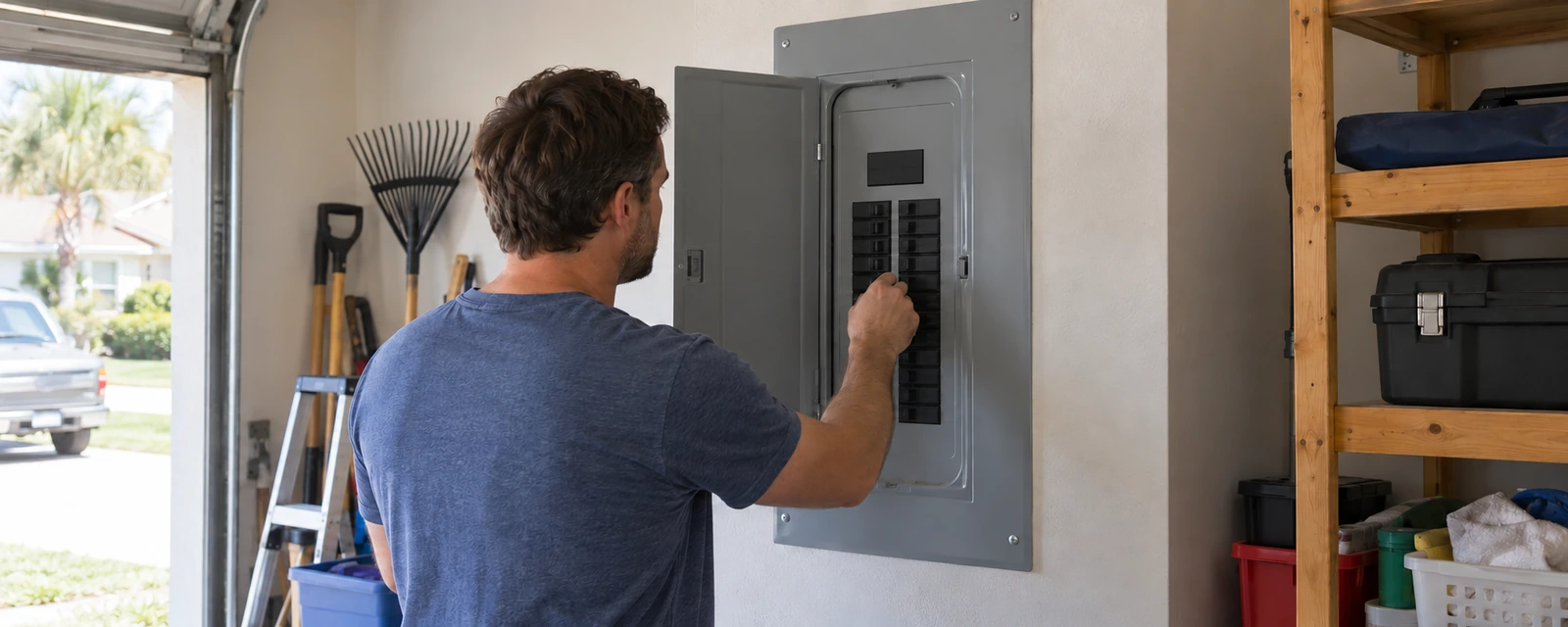
    • The type and brand of the main panel and any sub-panels.
    • The total amps of service to the home.
    • The type of wiring: copper, aluminum, cloth-covered or other.
    • Whether the panel uses breakers or fuses.
    • Visible hazards such as double-tapped breakers, scorching, exposed wiring, loose wiring or missing covers.
    • Whether the system appears to be in satisfactory condition.

    The inspector also takes photos of the panel with the cover off. The insurance company reads the form and looks at those photos. If something on the form is on the company’s list of things it won’t accept, the application stops there until it’s fixed.

    Hands hold a clipboard beside an exterior wall.

    Aluminum wiring

    This is the electrical issue with the clearest public record behind it, so it’s worth explaining carefully.

    What it is

    From about 1965 through the mid-1970s, many homes were built with aluminum wire for the regular branch circuits, the ones that feed outlets, switches and lights. This is different from the large aluminum cables that bring power into a house or feed big appliances, which are still used today.

    Why it’s a problem

    The U.S. Consumer Product Safety Commission has studied this. According to the CPSC, homes wired with aluminum wire made before 1972 are 55 times more likely to have one or more connections reach “fire hazard conditions” than homes wired with copper. The trouble is at the connections, where the wire meets outlets, switches and splices. Those connections can loosen and overheat over time.

    The CPSC lists warning signs, including:

    • Cover plates on outlets or switches that are warm to the touch.
    • Flickering lights.
    • Circuits that stop working.
    • The smell of burning plastic at an outlet or switch.

    The CPSC also says problems can exist with no warning signs at all.

    What the CPSC considers a permanent repair

    The CPSC recognizes these as permanent fixes:

    • Complete replacement of the aluminum branch wiring with copper.
    • The COPALUM crimp method, where a short piece of copper wire is attached to each aluminum wire end with a special tool by trained electricians.
    • The AlumiConn connector, a specific set-screw connector, as an acceptable alternative when COPALUM isn’t available.

    The CPSC specifically says that ordinary twist-on connectors and other quick fixes aren’t considered permanent repairs.

    What this means for insurance

    Insurance companies differ. Some won’t insure a home with aluminum branch wiring at all. Others will insure it once a licensed electrician documents that every connection has been repaired with an accepted method. If you’re buying a home from this era, find out which wiring it has before the inspection period ends.

    Older panels

    Certain panel types and brands made decades ago are widely flagged by insurance companies. I’m not going to list brand names here, because the lists differ from company to company and change over time. What matters is this:

    • Your four-point inspection will name the panel brand and type.
    • If it’s one a company won’t accept, the usual fix is replacing the panel.
    • A panel replacement is done by a licensed electrician under a permit.

    If you’re shopping for a home, open the panel door and take a photo of the label. Send it to me and I can tell you whether it’s likely to be an issue before you spend money on inspections.

    Fuse boxes and low amperage

    Homes that still use screw-in fuses instead of breakers are hard to insure. So are homes with very low service, because modern households draw far more power than a house was built for decades ago. If your home has less service than a company requires, upgrading the service is typically part of getting it insured.

    Cloth-covered and other old wiring

    Very old wiring with cloth or fabric insulation can become brittle with age and heat. Companies generally want it replaced. As with aluminum, what they’ll accept and what paperwork they want varies, so ask before you assume.

    Common questions

    My lights work fine. Why would my electrical fail an inspection?

    The inspection is about fire risk, not whether things turn on. Certain panels, wiring types and conditions are flagged even when everything seems to work.

    Do I have to rewire the whole house if I have aluminum wiring?

    Not necessarily. The CPSC recognizes full replacement with copper, the COPALUM crimp method and AlumiConn connectors. Ask which one the insurance company will accept before the work is done.

    How do I know what kind of wiring I have?

    A four-point inspection or a licensed electrician can tell you. Homes built from about 1965 to the mid-1970s are the ones most likely to have aluminum branch wiring.

    What each insurance company accepts varies and changes over time. Electrical work should be done by a licensed electrician.

    Official sources

    Keep reading

    Related coverage: homeowners insurance and flood insurance.

    Want me to look at your options?

    Call me or request a quote online. A real person will get back to you, not a bot.

  • Buying a Home in Florida: Your Insurance Timeline

    Buying a Home in Florida: Your Insurance Timeline

    Chris Chase, licensed Florida insurance broker

    Chris Chase
    Licensed Florida insurance broker · FL License #G193830 · NPN 21407586
    Last reviewed October 2026

    The short version

    • Start shopping for insurance as soon as you’re under contract. Older homes take time to place.
    • Order a four-point and a wind mitigation inspection with your home inspection, so problems show up while you can still negotiate.
    • Flood insurance bought in connection with a mortgage has no 30-day wait. Storms can still freeze everything.

    Insurance is one of the things most likely to delay a Florida closing. It doesn’t have to be, if you do things in the right order.

    This is the timeline I take buyers through.

    In this article

    As soon as you’re under contract

    • Start shopping. Don’t wait for the week of closing.
    • Get the facts on the house. Year built, roof age and material, and what’s been updated. Ask the seller for permits. See What You Need for an Insurance Quote.
    • Ask about the flood zone. Some home insurance companies require a flood policy in certain flood zones or near the coast, and your lender will tell you if it requires one.
    • Ask about past claims and repairs.

    During your inspection period

    The Florida Department of Financial Services describes the inspections you’ll run into and who pays:

    InspectionWhat it coversWho pays
    Four-pointRoof life expectancy, plumbing, electrical wiring, and heating and air on an older homeThe buyer or homeowner
    Wind mitigationFeatures that earn wind creditsUsually the buyer or homeowner
    Underwriting inspectionThe insurance company’s own visual check for hazards such as pools, trampolines, unrepaired damage, and dead tree limbsThe insurance company

    Order the four-point and wind mitigation along with your home inspection. Many inspectors do all three in one visit. Whether a four-point is required depends on the home’s age and the company: common triggers are 20, 30, or 40 years. Some companies accept a recent pre-purchase home inspection instead of doing their own.

    See Four-Point Inspections and Home Insurance and Wind Mitigation and Homeowners Insurance.

    Why this is the moment that matters

    An old roof, a declined electrical panel, or old plumbing can limit which companies will insure the home and what coverage you get. If you learn that during the inspection period, you can ask the seller to repair it, renegotiate, or walk away. If you learn it the week of closing, your choices are worse.

    Papers, keys and a phone rest together on a counter.

    Choosing coverage

    Send me the inspection reports and I’ll quote the companies that fit the home. When you compare quotes, look past the price:

    • The dwelling amount. See How Much Should Your Home Be Insured For?
    • The hurricane deductible, in dollars
    • Whether water damage is full, limited, or excluded
    • Whether the roof is paid at replacement cost or on a schedule
    • Whether belongings are covered at replacement cost

    Flood insurance

    Homeowners insurance doesn’t cover flood. A new National Flood Insurance Program policy normally takes 30 days to start, but FloodSmart lists an exception that matters to buyers: there’s no waiting period when you buy the policy in connection with a mortgage. See Does Homeowners Insurance Cover Flooding?

    Before closing

    • Line up the effective date. Coverage should start on your closing date. Some companies expect the policy to begin within about two weeks of closing.
    • Get your lender what it needs. Once coverage is approved and bound, I provide the proof of insurance for closing.
    • Don’t leave it to the last minute. If the closing date moves, tell me right away so the policy date moves with it.

    Watch the weather

    When a tropical storm or hurricane watch is issued, insurance companies generally stop writing new policies until it passes, in some cases when a watch or warning is issued for any part of Florida. In storm season, a closing can be delayed by a storm that’s nowhere near the house. Bind as early as the company allows.

    Special situations

    What to budget

    Averages from homeowners insurance quotes in the area over the past 36 months, shown as a yearly price:

    Dwelling coverageAverage quote (per year)Typical range (per year)
    $200,000 to $300,000$4,150$2,470 to $4,990
    $300,000 to $400,000$4,810$3,040 to $5,920
    $400,000 to $500,000$5,230$3,070 to $6,220

    The home’s age moves the price as much as its size. For every $1,000 of dwelling coverage, quotes averaged about $19.50 a year for homes built before 1980 and about $6.30 for homes built in 2015 or later. These are averages of past quotes, not an offer. Get a real quote before you commit to a monthly payment.

    After you move in

    • Keep the inspection reports. You’ll use them again.
    • Start a home inventory with photos, as the Department of Financial Services recommends.
    • Tell me about any repairs or upgrades. A new roof or updated plumbing can open up more companies at renewal.
    • Read the declarations page and ask me about anything that isn’t clear.

    Common questions

    When should I start shopping for home insurance?

    As soon as you’re under contract. Older homes can need inspections and repairs before a company will offer coverage.

    Do I need a four-point inspection to buy a house?

    Not to buy it, but many insurance companies require one to insure an older home. Common triggers are 20, 30, or 40 years.

    Is there a waiting period for flood insurance when I buy?

    FloodSmart says there’s no waiting period when the policy is bought in connection with a mortgage.

    Insurance companies don’t all follow the same rules or charge the same prices, and both change over time. Ask me what applies to you.

    Official sources

    Keep reading

    Related coverage: homeowners insurance and flood insurance.

    Not sure where you stand? Ask me.

    Tell me what you have now and I’ll compare it against the companies I work with. No pressure either way.

  • How Much Should Your Home Be Insured For?

    How Much Should Your Home Be Insured For?

    Chris Chase, licensed Florida insurance broker

    Chris Chase
    Licensed Florida insurance broker · FL License #G193830 · NPN 21407586
    Last reviewed October 2026

    The short version

    • Your home is insured for the cost to rebuild it, not its market value or your loan balance.
    • Florida law requires insurers to offer replacement cost coverage and includes building-code upgrade coverage at 25% unless you reject it in writing.
    • The dwelling amount is the biggest driver of your premium. Area averages by coverage amount are below.

    The dwelling amount on your policy often surprises people. It isn’t what you paid for the house, and it isn’t what you owe on it.

    Getting it right matters twice: it sets your premium, and it sets what you’re paid after a loss.

    In this article

    Rebuild cost, not market value

    Your home is insured for the estimated cost to rebuild it: materials and labor at today’s prices. Market value includes the land and the neighborhood. So the dwelling amount can be higher or lower than what the home would sell for.

    Why you can’t just pick a lower number

    Insurance companies run their own rebuild estimate and expect the dwelling amount to be close to it. Most require at least 100% of the estimate, and some allow a range a little below or above it. If a home’s market value is far below its rebuild cost, some companies won’t write it.

    There’s a second reason. The Florida Department of Financial Services explains that most replacement cost policies require you to carry limits equal to a certain percentage of the home’s replacement value, normally 80%. If you carry less, you can end up responsible for part of even a partial loss.

    A calculator and two paper bills rest on a wooden table.

    Replacement cost and actual cash value

    The Department defines the two:

    • Replacement cost pays the cost to replace an item, regardless of how old it is.
    • Actual cash value pays what the item was worth at the time of the loss. Depreciation is deducted.

    Florida Statute 627.7011 requires insurance companies to offer replacement cost coverage on the dwelling before issuing a homeowners policy. It also sets out how claims are paid: on a dwelling claim the company initially pays the actual cash value, minus your deductible, and then pays the rest as the repair work is done. On a total loss, it pays replacement cost without holding back depreciation.

    Building code upgrades: law and ordinance

    If your home is damaged and has to be rebuilt to current code, that can cost more than putting it back the way it was. Law and ordinance coverage pays for that difference.

    Under the same statute, a homeowners policy includes law and ordinance coverage at 25% of the dwelling limit unless you reject it in writing, and you can choose 50% instead. Older homes are where this matters most, because they’re furthest from current code. Think carefully before signing it away to save on premium.

    Extra protection above the limit

    Some policies offer additional coverage above the dwelling limit, often an extra 25%, when the home is insured to its full rebuild estimate. Ask whether yours has it.

    The Department also notes that many policies include an inflation guard that raises your limits each year, and warns that the increase isn’t guaranteed to keep up with construction costs. It recommends checking with your agent once a year.

    A total loss in Florida

    Florida’s valued policy law says that when a building is a total loss from a covered peril, the insurance company’s liability is the face amount of the policy. That’s one more reason the dwelling number should be accurate.

    Your belongings

    Contents can be covered at replacement cost or actual cash value. The difference is large on furniture, electronics, and clothes. Replacement cost on contents is optional with many companies, so check your declarations page.

    Two more things from the Department of Financial Services:

    • Special limits. Jewelry, guns, furs, money, cameras, art, and antiques have restricted coverage amounts and need to be added separately.
    • A home inventory. Keep a list of what you own, when you bought it, and what you paid, with photos and receipts for large purchases, stored somewhere other than the house.

    If you can’t live there

    Additional living expenses coverage pays reasonable extra costs while the home can’t be lived in after a covered loss. It’s part of most homeowners policies. Check the limit.

    Things attached to the house

    • Screen enclosures and pool cages are often not covered for hurricane damage unless you add coverage, usually up to a set limit.
    • Other structures. The Department notes that policies cover certain unattached structures separately from the dwelling.

    What each coverage amount has cost

    Averages from homeowners insurance quotes in the area over the past 36 months, shown as a yearly price:

    Dwelling coverageAverage quote (per year)Typical range (per year)
    Under $200,000$3,130$1,790 to $3,720
    $200,000 to $300,000$4,150$2,470 to $4,990
    $300,000 to $400,000$4,810$3,040 to $5,920
    $400,000 to $500,000$5,230$3,070 to $6,220
    $500,000 to $750,000$7,190$4,320 to $8,730
    $750,000 and up$10,700$5,770 to $13,640

    “Typical range” is where the middle half of quotes landed. A few very high quotes pull the averages up.

    The home’s age matters as much as its size. For every $1,000 of dwelling coverage, quotes averaged about $19.50 a year for homes built before 1980 and about $6.30 for homes built in 2015 or later. These are averages of past quotes, not an offer.

    Common questions

    Why is my dwelling coverage higher than what I paid for the house?

    Because it’s based on the cost to rebuild, which can be more than the market price, especially for older homes.

    Can I insure my home for just the mortgage balance?

    Generally no. Insurance companies expect the dwelling amount to be close to their rebuild estimate.

    What’s law and ordinance coverage?

    It pays the extra cost of rebuilding to current building codes after a covered loss. Florida law includes it at 25% of the dwelling limit unless you reject it in writing.

    Rules, prices, and discounts differ from one insurance company to the next and change over time. I’ll tell you what applies to the options I find for you.

    Official sources

    Keep reading

    Related coverage: homeowners insurance and flood insurance.

    Want a second set of eyes on your policy?

    Call me or request a quote online. A real person will get back to you, not a bot.

  • Shingle, Tile, Metal, or Flat: How Your Roof Type Affects Insurance

    Shingle, Tile, Metal, or Flat: How Your Roof Type Affects Insurance

    Chris Chase, licensed Florida insurance broker

    Chris Chase
    Licensed Florida insurance broker · FL License #G193830 · NPN 21407586
    Last reviewed October 2026

    The short version

    • Shingle roofs get scrutiny earliest, tile and metal later, and flat roofs soonest of all.
    • Roof shape matters too. A hip roof often earns a wind credit.
    • How the roof is insured can change with its material and age. Some policies pay less as the roof gets older.

    Two roofs of the same age can be treated very differently by an insurance company. What it’s made of matters almost as much as how old it is.

    This article covers the general pattern. For the legal protections that apply to older roofs, see Florida Home Insurance and Roof Age.

    In this article

    The general pattern

    Roof typeWhen companies commonly get selectiveNotes
    ShingleAround 15 to 20 yearsSome distinguish basic three-tab shingles from thicker architectural shingles and give the thicker ones longer.
    TileAround 25 to 30 yearsOften treated the same as metal.
    MetalAround 25 to 30 years, sometimes longerStanding-seam metal is usually viewed most favorably.
    Flat or rolledAround 10 yearsA flat roof over living space limits options the most.

    These are general ranges, not rules. Each company sets its own, they change, and some companies have no fixed age limit and go by condition instead.

    Age isn’t the whole story

    Florida law gives homeowners a path. Under Florida Statute 627.7011, a company can’t refuse a homeowners policy only because of age if the roof is under 15 years old. If it’s 15 or older, you can pay for an inspection, and if the inspector finds at least five years of useful life left, the company can’t refuse it for age alone.

    Some companies build that into their own guidelines and will go past their usual age limit when a roofer’s inspection shows enough life remaining.

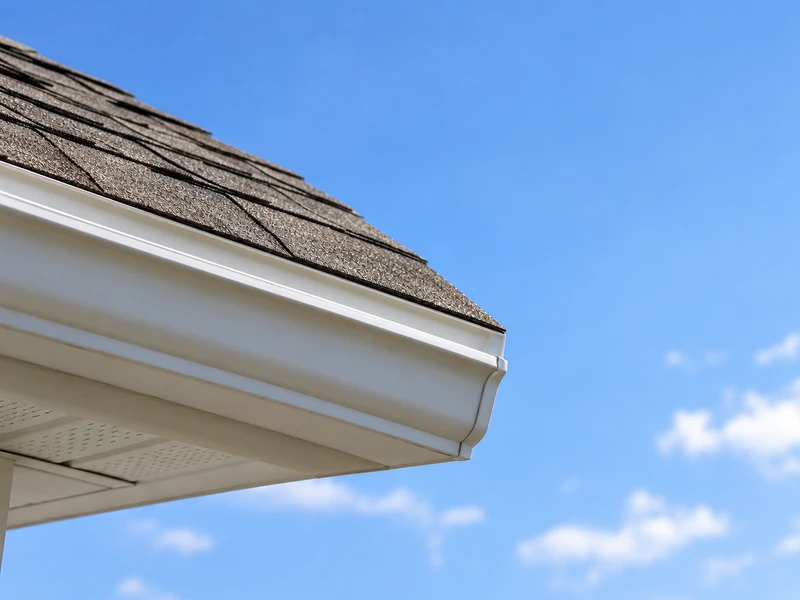
    A shingle roof edge and gutter stand against a blue sky.

    Roof shape

    A hip roof, where every side slopes down to the walls, often earns a wind credit. Some companies will apply it from clear photos of the whole roof, without a full inspection form, as long as nearly all of the roof is hip. A gable roof, with flat triangular ends, doesn’t get that credit.

    Florida Statute 627.0629 requires insurance companies to offer discounts for features that reduce wind losses, and it lists roof strength, roof covering, and roof-to-wall strength among them. See Wind Mitigation and Homeowners Insurance.

    How the roof is insured

    Material and age don’t only affect whether you get a policy. They can change what the policy pays.

    • Replacement cost. The policy pays to replace the damaged roof.
    • A payment schedule. The policy pays a percentage that drops as the roof ages. Some companies make this mandatory once a roof reaches a certain age, and the age differs by material: earlier for shingle and flat roofs, later for tile, later still for metal.
    • A stated value. The roof is insured for a set amount instead of its full replacement cost, in exchange for a lower premium.
    • A roof deductible. A separate deductible for roof claims, added automatically by some companies and optional with others.

    On rental property policies, paying the roof at its depreciated value is common. See Insuring a Rental Property in Florida.

    Layers

    Installing new shingles over old ones is cheaper than a tear-off. Many insurance companies won’t accept it. If you’re re-roofing, a full tear-off keeps more companies available to you.

    Flat roofs

    Flat and low-slope roofs are harder to place. Some companies decline a flat roof over living space outright, some allow it only if it’s a small share of the total roof, and some will write the home only with water damage coverage limited or excluded. A flat roof over a porch or carport is usually less of an issue than one over a bedroom.

    Solar panels on the roof

    Panels add questions about the roof underneath. Some companies want the roof to be fairly new before they’ll accept panels on it, and some won’t accept panels on a tile roof. If you’re considering solar and your roof is getting older, sort out the roof first. See Solar Panels and Home Insurance in Florida.

    Replacing your roof

    • Keep the permit and the paid invoice. Without them, the roof may be rated at its old age. A closed permit is the best proof.
    • Choose a full tear-off.
    • Ask about the attachment. How the roof deck is nailed and how the roof connects to the walls are part of what a wind mitigation inspection records.
    • Consider a secondary water barrier. It’s one of the improvements the My Safe Florida Home program lists.
    • Get a new wind mitigation inspection when the job is done. Florida’s inspection form was revised effective April 1, 2026, so a new inspection should use the current version.
    • Tell me. A new roof can open up companies that weren’t available before.

    Choosing a material with insurance in mind

    I’m not roofers, and the right material depends on your home and budget. From the insurance side, two things are worth knowing before you choose. First, a longer-lived material generally buys you more years before companies start asking for inspections. Second, whatever you choose, the documentation and the way it’s attached matter as much as the material.

    Common questions

    Is a metal roof cheaper to insure?

    It’s usually viewed favorably and gets more years before companies ask questions. Whether it lowers your premium depends on the company and the rest of the home.

    Does a tile roof last longer in an insurer’s eyes?

    Generally yes. Tile is commonly given into the 25 to 30 year range, where shingle gets attention around 15 to 20.

    Can I get coverage with a flat roof?

    Often, but with fewer choices, and sometimes with limits on water damage coverage. Tell me how much of the roof is flat and what’s under it.

    What’s in this article is general. Companies differ on the details and update them often, so I check the specifics when I quote you.

    Official sources

    Keep reading

    Related coverage: homeowners insurance and flood insurance.

    Ready to see what’s out there?

    Tell me what you have now and I’ll compare it against the companies I work with. No pressure either way.

  • Solar Panels and Home Insurance in Florida

    Solar Panels and Home Insurance in Florida

    Chris Chase, licensed Florida insurance broker

    Chris Chase
    Licensed Florida insurance broker · FL License #G193830 · NPN 21407586
    Last reviewed October 2026

    The short version

    • Insurance companies handle solar differently. Some cover panels, some exclude them unless you add coverage, and some have conditions.
    • Florida law says an HOA can’t prohibit solar panels, though it can have a say in where they go.
    • Under Florida’s net metering rule, systems of 10 kW or less don’t require liability insurance. Larger ones can.

    Solar is common in Florida now, and insurance companies haven’t settled on one way to handle it. Before you sign with an installer, it’s worth a call.

    This covers three things: your home insurance, your HOA, and what the utility can ask of you.

    In this article

    Are the panels covered?

    It depends on the policy. I see four approaches:

    • Covered as part of the house, as long as certain conditions are met.
    • Excluded from the base policy, with an optional endorsement to add them.
    • Allowed but not covered. The company will insure the home and won’t pay for damage to the panels.
    • Not accepted in some configurations, which means that company won’t write the home at all.

    Because the answers are that far apart, the question to ask isn’t “does home insurance cover solar.” It’s “does my policy cover my panels, and will my company still renew me after I install them?”

    What insurance companies ask about

    • The permit. A closed permit for the installation is a common requirement.
    • When the system was installed. Some companies only accept systems installed in recent years.
    • System size. Many companies have a maximum size in kilowatts. A typical cut-off for a house is around 10 kW, though some go much higher.
    • The roof underneath. Some companies want the roof to be fairly new, around 10 years or less, before they’ll accept panels on it.
    • The roof material. Some won’t accept panels mounted on a tile roof.
    • Whether the system sells power back to the utility. A few companies have rules about net-metered systems.
    A shingle roof edge and gutter stand against a blue sky.

    Your roof comes first

    Panels and roofs are tied together in an insurer’s eyes. An older roof already gets attention on its own. See Florida Home Insurance and Roof Age and How Your Roof Type Affects Insurance. Adding panels to a roof that’s close to an age limit can leave you with a home that’s harder to place.

    If your roof is getting older and you’re planning solar, talk to me about the roof first.

    What Florida law says about your HOA

    Florida Statute 163.04 protects your right to install solar. A deed restriction, homeowners association, or condominium association can’t prohibit solar collectors from being installed on buildings. The association can decide the specific location on the roof where they go, within an orientation to the south or within 45 degrees east or west of due south, as long as that doesn’t impair how well the system works.

    So your HOA can’t say no. It may have a say in where. Get its approval in writing before installation.

    Net metering and what the utility can require

    Net metering is the arrangement where the power your system produces offsets what you use, with credit for the extra you send back. Florida’s rule for customer-owned renewable generation sorts systems into tiers by size, and the liability insurance requirement depends on the tier:

    TierSystem sizeLiability insurance under the rule
    Tier 110 kW or lessNot required. The utility may recommend it.
    Tier 2More than 10 kW, up to 100 kWThe utility may require general liability coverage of no more than $1 million.
    Tier 3More than 100 kW, up to 2 MWThe utility may require no more than $2 million.

    A system of 10 kW or less is Tier 1. If yours is larger, ask the utility what proof of insurance it wants, and tell me, because your homeowners liability limit may need to be reviewed.

    Before you install

    • Call me first. I’ll check how your current policy handles solar and whether it changes your options at renewal.
    • Get the system size in writing from the installer.
    • Confirm the installer pulls the permit and closes it.
    • Check the roof’s age and material against what your insurance company accepts.
    • Get your HOA’s approval in writing, including the location.
    • Ask the utility what tier your system is and whether it requires proof of liability insurance.

    After you install

    • Send me the closed permit and the system’s specifications.
    • Tell me what the system cost so the coverage on your home can be reviewed. See How Much Should Your Home Be Insured For?
    • Keep the contract, the invoice, and photos.
    • If your policy excludes the panels, ask me about the endorsement to add them.

    Storms

    Panels on a roof are exposed to wind. If your policy covers them, a hurricane claim on the panels falls under your hurricane deductible, the same as the rest of the house. See Why Is My Hurricane Deductible So High? If your policy doesn’t cover them, wind damage to the panels is yours to pay. That’s the single most important thing to find out before you buy.

    What I do

    I’m not solar installers and I don’t give advice on which system to buy. I check how the insurance companies available to me treat your setup, tell you which ones will cover the panels, and help you avoid installing a system that leaves your home hard to insure.

    Common questions

    Will solar panels raise my home insurance?

    They can change it. Some companies cover the panels as part of the house, some charge for an endorsement, and some don’t cover the panels at all.

    Can my HOA stop me from installing solar?

    No. Florida Statute 163.04 says an association can’t prohibit solar collectors. It can determine the location on the roof within limits.

    Do I need extra liability insurance for net metering?

    Under Florida’s rule, not for a system of 10 kW or less. Larger systems can be required to carry general liability coverage.

    Every insurance company has its own rules and prices, and they change. I’ll tell you what applies to the options I find for you.

    Official sources

    Keep reading

    Related coverage: homeowners insurance and flood insurance.

    Want me to look at your options?

    Send me a quote request or give me a call. I’ll shop it and explain what I find.
  • Florida’s State-Backed Home Insurer: When It’s an Option

    Florida’s State-Backed Home Insurer: When It’s an Option

    Chris Chase, licensed Florida insurance broker

    Chris Chase
    Licensed Florida insurance broker · FL License #G193830 · NPN 21407586
    Last reviewed October 2026

    The short version

    • Citizens can write a policy only when private coverage isn’t available, or when private quotes are more than 20% higher than Citizens for comparable coverage.
    • It has its own requirements, including flood insurance for many homes and a limit on the home’s value.
    • A Citizens quote always starts with shopping the private market.

    Citizens Property Insurance is the state-backed company that insures Florida homes when the private market won’t, or won’t at a comparable price. It’s a real option for a lot of homeowners, and it comes with rules.

    I’m writing this as a broker that also shops private companies, so the goal is to help you see where Citizens fits, not to push you toward or away from it.

    In this article

    Who can get it

    According to Citizens, it may write a new policy only when:

    • coverage is not available from a Florida-authorized insurance company, or
    • premiums from Florida-authorized insurance companies are more than 20 percent higher than the premium for comparable coverage from Citizens.

    What it requires

    • Flood insurance. Citizens requires proof of a flood policy for many of its policyholders. See Does Homeowners Insurance Cover Flooding?
    • A home under its value limit. Citizens only insures homes below a set dwelling amount, with a higher limit in Miami-Dade and Monroe counties.
    • A four-point inspection on older homes. Expect one once the home is past about 20 years. See Four-Point Inspections and Home Insurance.
    • Proof for a newer roof. A closed permit, or a contractor’s statement with a paid-in-full invoice.
    • A current wind mitigation form if you want the credits. Citizens accepts the earlier form version when the inspection was done within five years before April 1, 2026 and nothing structural has changed.
    An open policy folder rests on a kitchen table.

    Things that catch people off guard

    • A gap in coverage. If the home has had no coverage recently, there can be a surcharge and a waiting period before coverage starts.
    • Coverage placed by a lender. If your prior coverage was lender-placed, Citizens wants a four-point inspection dated very close to the policy start.
    • Water claims. Two non-weather water losses in three years, or three in five, can leave you eligible only for a more basic policy unless the cause was repaired.
    • Seasonal homes have extra requirements, such as a gated community or a central alarm.
    • Short-term rentals. A home rented for short stays more than a few times a year isn’t eligible for a standard policy.
    • Homes owned by an LLC or corporation don’t go on a standard homeowners policy. They can go on a different form, with liability coverage excluded.
    • Pools. An unfenced or empty pool may only be eligible without liability coverage.

    Your notice period is different

    Most Florida homeowners get at least 120 days’ notice of a nonrenewal. The Florida Department of Financial Services lists an exception: when a Citizens policy has been assumed by an authorized private insurance company, the notice period is 45 days. If you receive a letter saying a private company has offered to take over your Citizens policy, read it carefully and call me before the deadline in the letter.

    If your wind coverage was removed

    The Department of Financial Services notes that when a private policy excludes wind coverage, the excluded wind coverage is available through Citizens or the private market. So in some cases Citizens covers only the wind portion alongside a private policy for everything else.

    What to compare

    Price is only one line. When I put a Citizens quote next to a private one, I look at:

    • The dwelling amount and whether it matches the rebuild estimate
    • Whether belongings are paid at replacement cost or depreciated value
    • Water damage coverage: full, limited, or excluded
    • The hurricane deductible
    • Liability coverage
    • The flood insurance requirement and what it adds to your total cost

    That last one is easy to miss. If Citizens requires a flood policy and a private company doesn’t, the fair comparison is Citizens plus flood against the private quote.

    What private quotes have looked like

    For context, here are averages from homeowners insurance quotes in the area over the past 36 months:

    Dwelling coverageAverage quote (per year)Typical range (per year)
    $200,000 to $300,000$4,150$2,470 to $4,990
    $300,000 to $400,000$4,810$3,040 to $5,920
    $400,000 to $500,000$5,230$3,070 to $6,220

    These are averages of past quotes, not an offer.

    What to do

    • Have the private market shopped first. It’s required for eligibility anyway.
    • Get your inspections in order. A current four-point and wind mitigation report help with every company.
    • Fix what’s fixable. A repaired leak, a replaced panel, or a documented roof can move you from ineligible to eligible with a private company.
    • Keep coverage continuous.
    • Re-shop every year. The private market changes, and so does your home.

    How I handle a Citizens quote

    When someone calls me about Citizens, I start by shopping the private companies available to me for that home, because that’s what the eligibility rule calls for and because a private policy is sometimes the better fit. I write down what each one offered or why it declined.

    Then I line up the comparable private offers against what Citizens would charge, and walk you through the 20% math and the coverage differences. You’ll see the whole picture, including the cost of any flood policy that comes with it, before you decide.

    Common questions

    Is Citizens cheaper than private insurance?

    Sometimes. By rule it’s only available when comparable private coverage is unavailable or more than 20% higher, so the answer depends on your home.

    Do I have to buy flood insurance with Citizens?

    Citizens requires proof of flood coverage for many policyholders. I’ll tell you whether it applies to your home.

    Can I stay with Citizens if a private company offers me a policy?

    Eligibility depends on the 20% test. Call me when you get an offer and I’ll go through it with you.

    Citizens’ rules change often. Check citizensfla.com for the current ones, and call me to see how they apply to your home.

    Official sources

    Keep reading

    Related coverage: homeowners insurance and flood insurance.

    Not sure where you stand? Ask me.

    Call me or request a quote online. A real person will get back to you, not a bot.