

Chris Chase
Licensed Florida insurance broker · FL License #G193830 · NPN 21407586
Last reviewed October 2026
The short version
- Florida law requires insurance companies to offer discounts for features that reduce wind damage.
- A wind mitigation inspection documents those features on a standard state form. The form was revised effective April 1, 2026.
- Some credits don’t need the form at all, such as roof shape from photos or a home built in 2002 or later.
A wind mitigation inspection is one of the few pieces of paperwork that can work in your favor on a Florida home insurance quote.
It doesn’t decide whether a company will insure you. It documents the features that help your home stand up to wind, and those features are tied to discounts on the wind portion of your premium.
In this article
What the law requires
Florida Statute 627.0629 requires residential property insurance rates to include discounts, credits, or other rate differentials for features that reduce windstorm losses. The statute lists the categories:
- Wind uplift prevention
- Roof strength
- Roof covering performance
- Roof-to-wall strength
- Wall-to-floor-to-foundation strength
- Opening protection
- Window, door, and skylight strength
The same law requires each insurance company to describe its hurricane mitigation discounts on its website. So the discounts exist with every company. What differs is how much each one gives.
What the inspection records
A qualified inspector looks at the home and fills out the state’s Uniform Mitigation Verification Inspection Form, numbered OIR-B1-1802. In plain terms, it records:
- Which building code the home was built under, based on the year built
- The roof covering and when it was installed
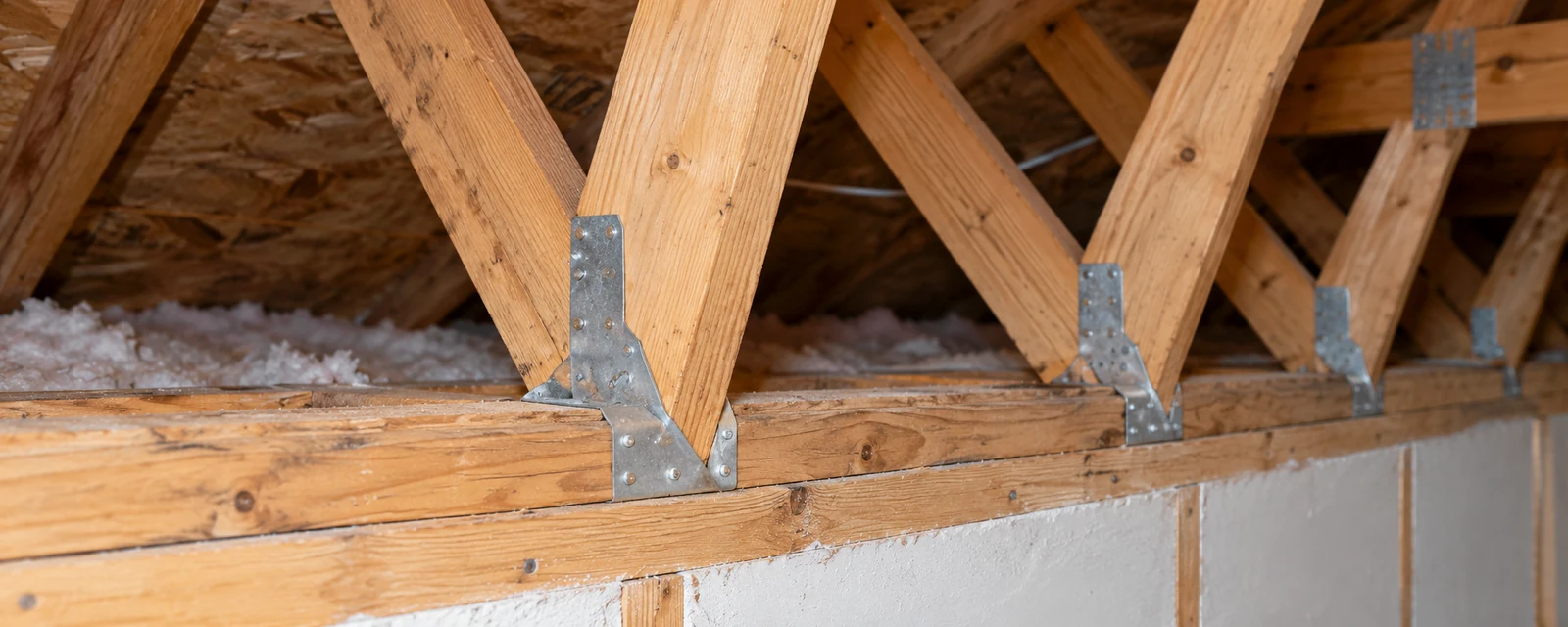
- How the roof deck is attached to the framing
- How the roof is connected to the walls
- The roof shape, hip or otherwise
- Whether there’s a secondary water barrier under the roof covering
- Protection on windows and doors, such as shutters or impact glass
The inspector attaches photos. The report goes to your agent or insurance company, and the credits are applied from it.
The 2026 form change
The form was revised, and the new version, marked Rev. 04/26, took effect April 1, 2026. Inspections done on or after that date have to use the new form. According to a Citizens Property Insurance bulletin, the update changed the building code, roof covering, and attachment criteria, and added items such as FORTIFIED Home certificates and roof slope.
Citizens has said it will keep accepting the earlier version if the inspection was completed within five years before April 1, 2026 and no structural changes have been made. Other insurance companies set their own rules, so if your report is older, ask before assuming it still counts.
Credits you may not need the form for
- Roof shape. Some companies will apply the hip roof credit from clear color photos showing the entire roof.
- Year built. Homes built in 2002 or later were built under the newer statewide building code. With proof of the year built, some companies apply the minimum building code credit without an inspection.
- Opening protection on newer coastal homes. Some companies apply this automatically for recently built homes in certain coastal counties.
These are a floor, not a ceiling. If your home has more features than the automatic credits assume, the full inspection is how you get paid for them.
Who pays for it
The Florida Department of Financial Services says the homeowner typically pays for a wind mitigation inspection. If the insurance company orders a reinspection of its own, the company pays for that one.
The My Safe Florida Home program offers free wind mitigation inspections to eligible Florida homeowners, and grant funding of up to $10,000 toward approved improvements. Eligibility, funding, and program rules come from the program itself, so check its site for where things stand.
Is it worth getting one?
Usually, if any of these are true:
- You’ve replaced the roof since your last report
- You’ve added shutters or impact windows and doors
- Your report is several years old
- You’ve never had one and your home was built or re-roofed after 2002
- You’re buying a home and ordering inspections anyway
If your home is older with its original roof attachment and no opening protection, the report may not earn much. It still documents what you have, and it’s the starting point if you plan improvements.
How it shows up in the price
I don’t quote a credit amount until I see the report, because the amount depends on the home and the company. What I can show is how much construction era matters overall. These are averages from homeowners insurance quotes in the area over the past 36 months, as the yearly price for every $1,000 of dwelling coverage:
| Year the home was built | Average price per $1,000 of coverage |
|---|---|
| Before 1980 | $19.50 |
| 1980 to 2001 | $15.80 |
| 2002 to 2014 | $10.40 |
| 2015 or newer | $6.30 |
Newer homes cost far less to insure for the same coverage, and stronger wind construction is a large part of why. These are averages of past quotes, not an offer.
Improvements that tend to matter
The My Safe Florida Home program lists the kinds of upgrades it supports, which line up with what the inspection form records:
- Roof deck attachment
- Roof-to-wall connections
- Secondary water barriers
- Window and door replacement, including garage doors
If you’re re-roofing, that’s the cheapest time to upgrade the first three. See How Your Roof Type Affects Insurance.
Common questions
Is a wind mitigation inspection required?
Not usually. It’s how you document features that earn credits. Some credits can be applied without it.
How long is a report good for?
Each insurance company sets its own rule. Citizens accepts the earlier form version if the inspection was within five years before April 1, 2026 and nothing structural has changed.
Do I need a new inspection after a new roof?
Yes, if you want credit for it. The roof covering, deck attachment, and water barrier are all on the form.
Rules, prices, and discounts differ from one insurance company to the next and change over time. I’ll tell you what applies to the options I find for you.
Official sources
- Florida Statute 627.0629: windstorm mitigation discounts
- Citizens Property Insurance: wind mitigation form changes
- Florida Department of Financial Services: homeowners insurance overview
- My Safe Florida Home program
Keep reading
- Four-Point Inspections and Home Insurance
- Shingle, Tile, Metal, or Flat: How Your Roof Type Affects Insurance
- Home Insurance Discounts and Credits Worth Asking About
- Florida homeowners insurance
Related coverage: homeowners insurance and flood insurance.
Want a second set of eyes on your policy?
Tell me what you have now and I’ll compare it against the companies I work with. No pressure either way.