

Chris Chase
Licensed Florida insurance broker · FL License #G193830 · NPN 21407586
Last reviewed October 2026
The short version
- Homeowners insurance doesn’t cover flood damage. That takes a separate flood policy.
- A new National Flood Insurance Program policy normally takes 30 days to start, so buying one when a storm is coming doesn’t help.
- The flood zone drives the price, and it is set address by address.
This is one of the most common misunderstandings I see. Having homeowners insurance doesn’t mean every kind of water damage is covered.
The Florida Department of Financial Services puts it plainly: flood isn’t covered under homeowners policies and requires a separate flood insurance policy.
In this article
What counts as a flood
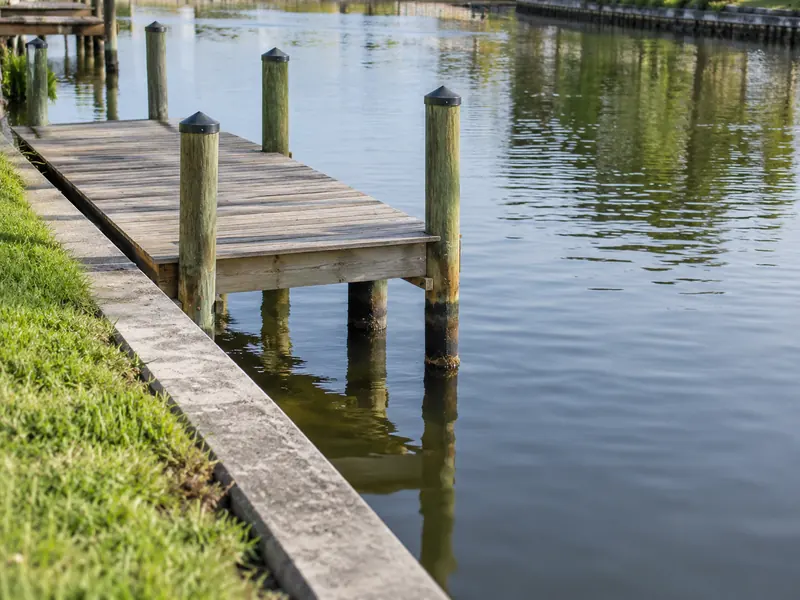
The Department of Financial Services describes the typical definition of flood as an overflow of inland or tidal waters, runoff of surface water from any source, or mudflow. In everyday terms, it’s water that rises from outside and comes in: storm surge, a river or canal over its banks, or heavy rain that pools and enters the house.
Water damage versus flood
- Water damage from something sudden inside the home, like a burst pipe, is the kind of loss a homeowners policy can cover, subject to its terms. On older homes that coverage is often limited. See Water Damage, Plumbing, and Older Homes.
- Flood is rising water from outside. That’s what a flood policy is for.
- Sewer or drain backup is its own category. The Department notes that some policies exclude it unless you add it by endorsement.
- Rain coming in during a hurricane after wind opens up the building is part of hurricane coverage under Florida law, not flood.
When a storm causes both wind damage and flooding, two different policies can be involved, each with its own deductible and its own adjuster.
What your policy already tells you
Florida law requires homeowners policies to carry a prominent notice on the declarations page about flood insurance. If you’ve never read yours, it’s worth a look. It’s the state’s way of making sure nobody assumes flood is included.
How a flood policy works
Most flood insurance is written through the National Flood Insurance Program (NFIP). According to FloodSmart, the program’s official site:
- NFIP policies are sold through participating insurance companies and independent agents. The price is the same whichever one you use.
- A homeowner can buy up to $250,000 of building coverage and up to $100,000 of contents coverage.
- A renter can buy up to $100,000 of contents coverage.
- Building and contents are separate coverages. You can have one without the other.
There’s also a private flood market. Private policies can offer different limits and terms. Availability depends on the property and on current markets, so I check both and tell you what I find.
The 30-day wait
FloodSmart says a new NFIP policy takes effect 30 days after you buy it. There are a few exceptions:
- No wait when you buy the policy in connection with a mortgage.
- No wait when you’re changing coverage at renewal.
- A one-day wait when your property has been newly mapped into a high-risk zone, if you buy within 12 months.
- A one-day wait for flooding related to a recent wildfire.
For most people, that means flood insurance has to be in place a month before it’s needed. In Florida, that’s before hurricane season, not when a storm has a name.
Who should think about flood insurance
In Florida, just about everyone. Two situations make it more than a suggestion:
- Your lender requires it. If it does, your lender will tell you, and it will be a condition of the loan.
- Your home insurance company requires it. Some companies require proof of a flood policy for homes in certain flood zones or close to the coast. Citizens Property Insurance requires it for many of its policyholders.
Outside those cases it’s your choice, and a home outside a high-risk zone is usually far cheaper to cover.
A small bonus
Some home insurance companies give a discount on the homeowners policy when you also carry a flood policy. It’s worth asking about. See Home Insurance Discounts and Credits Worth Asking About.
What to have ready for a flood quote
- The property address
- The year built and the type of foundation
- The flood zone, if you know it
- An elevation certificate, if you have one
- Your mortgage company’s requirements, if any
- Whether you want building coverage, contents coverage, or both
How I help
I can write flood insurance and explain how it fits with your homeowners policy. I’ll check the NFIP and the private options available for your property, lay out the limits and deductibles side by side, and help you time the purchase around the waiting period.
Common questions
Does homeowners insurance cover hurricane flooding?
No. Wind damage from a hurricane falls under the homeowners policy and its hurricane deductible. Rising water falls under a flood policy.
Can I buy flood insurance right before a storm?
A new NFIP policy normally takes 30 days to start, so it won’t cover a storm that’s already on the way.
Do I need flood insurance if I’m not in a flood zone?
It may not be required, but homes outside high-risk zones flood too, and coverage there usually costs much less.
Does flood insurance cover my belongings?
Only if you buy contents coverage. Building and contents are separate.
Is the price different depending on who I buy it from?
For an NFIP policy, no. FloodSmart says pricing is the same across companies and agents. Private flood policies are priced by each company.
Flood rules, zones, and prices change. Check the official sources below for current rules, and call me for a quote on your address.
Official sources
- FloodSmart (National Flood Insurance Program): buying a policy
- Florida Department of Financial Services: homeowners insurance overview
- Florida Statute 627.4025: hurricane coverage defined
Keep reading
- Why Is My Hurricane Deductible So High?
- Water Damage, Plumbing, and Older Homes
- Citizens Insurance in Florida: When It’s an Option
- Florida homeowners insurance
Related coverage: flood insurance and homeowners insurance.
Ready to see what’s out there?
Request a quote or call me to review your options. You’ll talk to a real person.